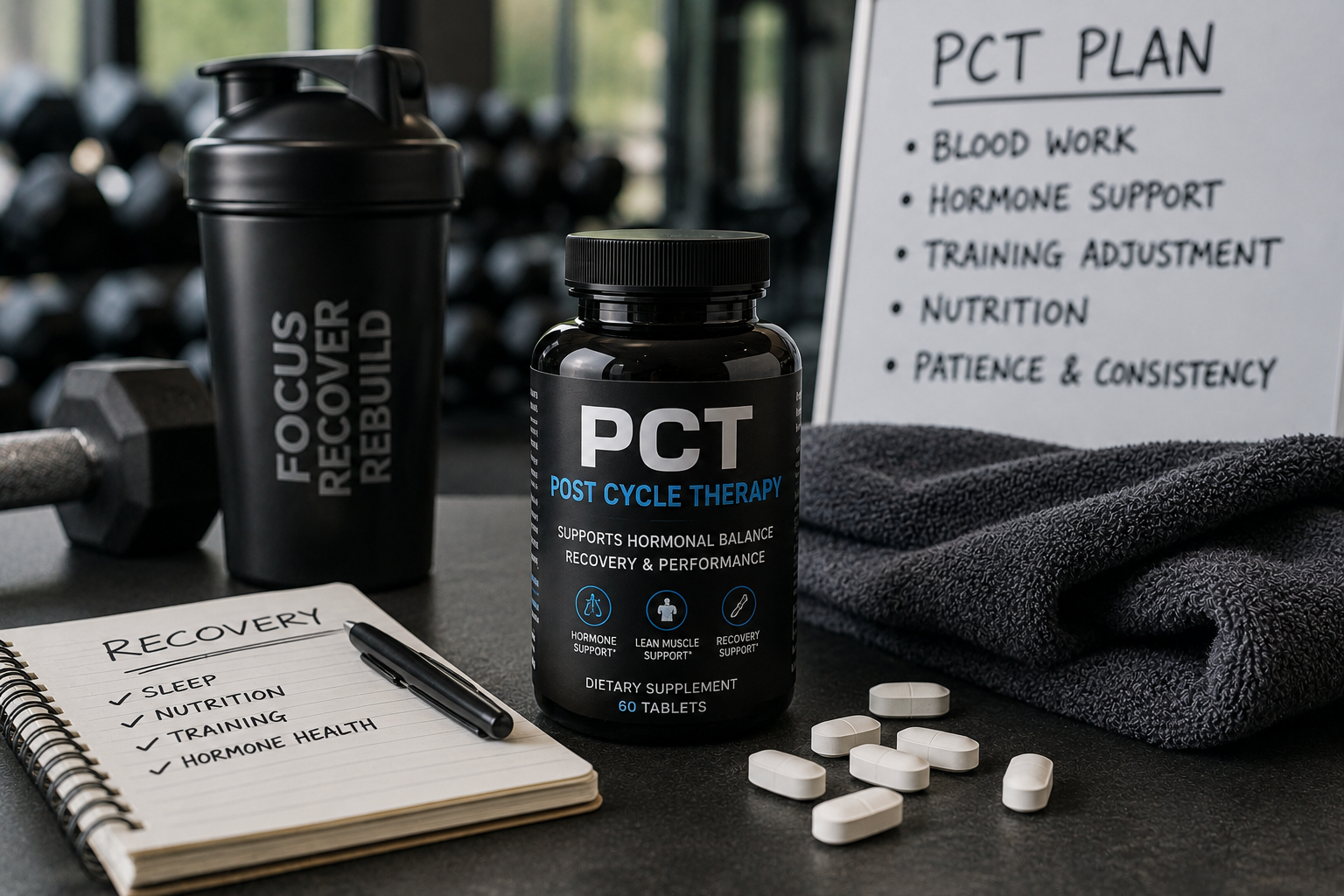
Recovery is one of the most important parts of any long-term performance strategy, yet it is often discussed less than training, nutrition, and physique development.
For athletes involved in demanding training programmes, recovery is not simply about taking a few days away from the gym. It involves managing fatigue, restoring normal routines, supporting sleep and nutrition, and understanding how the body responds after periods of increased physical stress.
This becomes particularly important when discussing post cycle recovery and the broader subject of hormonal balance.
Why Recovery Planning Matters
A structured performance phase places demands on multiple systems within the body.
Training creates physical stress. Nutritional changes alter energy availability. Sleep and recovery determine how effectively the body can adapt.
When these demands continue for an extended period, simply stopping a training programme does not automatically return everything to its previous state.
Recovery therefore needs to be considered as a process.
Rather than treating the end of a performance phase as the finish line, athletes can benefit from planning what happens afterward and allowing sufficient time to evaluate how their body responds.
Understanding Post Cycle Therapy
Post cycle therapy, commonly referred to as PCT, is a term frequently used within bodybuilding and performance communities to describe strategies intended to address hormonal recovery following anabolic steroid use.
The subject is complex because anabolic steroid exposure can suppress the body’s natural production of hormones.
The degree of suppression can vary according to the substances involved, duration of exposure, individual physiology, and other factors.
This means there is no universal recovery strategy that is appropriate for everyone.
The broader Post Cycle Therapy category reflects the range of products and information commonly associated with this area of performance research, but category availability should not be interpreted as evidence that a particular product or protocol is appropriate for an individual.
Hormonal Balance After Performance Phases
The endocrine system is highly interconnected.
Natural testosterone production involves communication between the hypothalamus, pituitary gland, and testes. External anabolic hormones can interfere with this signalling process.
When external hormones are discontinued, the body may not immediately return to its previous baseline.
This is one reason post-cycle recovery can be more complicated than simply waiting a predetermined number of days.
Blood testing and professional medical assessment can provide considerably more useful information than trying to judge hormonal recovery based on appearance, mood, or gym performance alone.
Why Symptoms Can Be Misleading
People sometimes attempt to evaluate recovery by looking at symptoms.
Changes in energy, motivation, libido, mood, sleep, or training performance may all be interpreted as evidence of hormonal changes.
However, these symptoms are not specific enough to provide a reliable diagnosis.
Poor sleep can affect energy.
A calorie deficit can affect libido.
Training fatigue can affect motivation.
Stress can influence mood.
Consequently, symptoms should be considered alongside objective health information rather than treated as a substitute for medical evaluation.
Blood Work Provides Better Information
Health monitoring becomes particularly valuable when hormonal recovery is being considered.
Depending on an individual’s circumstances, a healthcare professional may evaluate hormone levels alongside other health markers.
This can provide information that cannot be obtained through appearance or gym performance.
Monitoring may also help identify issues that do not produce obvious symptoms.
The goal should not simply be to determine whether an athlete feels normal. It should be to establish whether relevant physiological markers are returning toward an appropriate baseline.
Recovery Is More Than Hormones
Although hormonal recovery is an important part of the discussion, post-cycle recovery should not be reduced to hormones alone.
Training, nutrition, sleep, stress, cardiovascular health, and general wellbeing all matter.
After a demanding performance phase, reducing unnecessary training stress can give the body additional opportunity to recover.
This does not necessarily mean stopping exercise completely.
Instead, training can be adjusted according to performance, fatigue, and recovery capacity.
Training During Recovery
Training during a recovery phase should be approached differently from training during a period focused on maximum performance.
More is not always better.
If strength has declined or fatigue is elevated, maintaining a manageable workload may be more productive than attempting to force previous performance levels immediately.
Exercise technique, moderate volume, sensible intensity, and adequate rest can all help create a more sustainable transition.
The objective is to maintain healthy movement and fitness while allowing recovery to progress.
Nutrition During Post Cycle Recovery
Nutrition can also influence how well an athlete manages a recovery phase.
A prolonged calorie deficit may create additional stress at a time when the body is already adapting to changes in hormonal and training conditions.
Adequate protein remains important for maintaining muscle tissue, while sufficient energy intake can support normal physiological processes and training recovery.
Micronutrient intake should also come primarily from a varied and balanced diet.
There is no single food or supplement capable of replacing adequate nutrition.
Sleep and Stress Management
Sleep is one of the most underrated components of recovery.
Poor sleep can affect mood, concentration, training performance, appetite, and general wellbeing.
During a post-cycle period, maintaining a consistent sleep schedule can therefore be particularly valuable.
Stress management also deserves attention.
Work pressure, poor sleep, excessive training, and aggressive dieting can all contribute to a larger overall stress load.
Reducing unnecessary stressors can make the recovery period easier to manage.
Why Recovery Should Not Be Rushed
One of the biggest mistakes in post-cycle planning is assuming that recovery must happen according to a fixed timetable.
Individual responses can differ considerably.
One person’s experience does not necessarily predict another person’s outcome.
This is especially relevant when considering medications or other interventions intended to influence hormonal pathways.
For example, products containing compounds such as clomiphene are pharmacologically active medicines with their own considerations and potential adverse effects. A product listing such as Pharmaqo Labs PCT Tabs 102.5mg x 60 Tabs should therefore be viewed as information about a product, not as a universal recovery recommendation.
Anyone considering prescription or pharmacologically active medication should discuss it with an appropriately qualified healthcare professional.
The Importance of Responsible Research
The internet contains an enormous amount of information about PCT.
Some sources provide useful educational material, while others are based almost entirely on personal experience.
The distinction matters.
A protocol that someone claims worked for them may have been influenced by their previous cycle, genetics, baseline hormone levels, training history, nutrition, sleep, or other factors.
It does not automatically establish that the same approach will work for someone else.
Responsible research means understanding these limitations before making decisions.
Monitoring the Return to Normal Training
Training performance can provide useful information during recovery, but it should not be the only metric.
An athlete can track:
- Training Performance.
- Energy Levels.
- Sleep Quality.
- Body Weight.
- Appetite.
- Mood.
- Recovery Between Sessions.
- General Wellbeing.
Looking at these trends over time can help identify whether training demands are appropriate.
However, these observations should complement rather than replace professional medical assessment.
Maintaining Muscle During Recovery
Concerns about losing muscle can create unnecessary pressure during post-cycle periods.
The best approach is generally to maintain sensible resistance training, adequate nutrition, and appropriate recovery rather than attempting to compensate with excessive workload.
Muscle development is the result of long-term training.
A temporary reduction in performance does not automatically mean that meaningful progress has been lost.
Maintaining good habits during a recovery period can provide a stronger foundation for future training.
Building a Sustainable Performance Strategy
The end of a performance phase should also be viewed as an opportunity to reassess the entire programme.
What worked?
What created unnecessary fatigue?
How was your sleep?
Was nutrition sustainable?
Did training performance improve?
Were health markers monitored?
These questions can help athletes make better decisions in the future.
A long-term strategy should not simply move from one performance phase to the next without allowing time for assessment and recovery.
When Professional Guidance Matters
Medical guidance becomes particularly important when prescription medicines, hormonal changes, or persistent symptoms are involved.
A qualified healthcare professional can assess an individual’s history, symptoms, medications, and relevant laboratory results.
This is significantly more reliable than relying on online cycle calculators or anonymous forum protocols.
If symptoms such as persistent fatigue, significant mood changes, sexual dysfunction, or other concerning changes continue, professional assessment should take priority over attempting to self-manage the situation.
Final Thoughts
Post cycle recovery is a broader process than simply following a predetermined PCT schedule.
Hormonal recovery, training management, nutrition, sleep, stress, and health monitoring all contribute to the process.
The most responsible approach is to recognise that individual recovery can vary considerably and that objective health information is more valuable than assumptions based on appearance or anecdotal experience.
For athletes focused on long-term development, recovery should be treated as part of the overall performance strategy rather than an interruption between training phases.
A well-managed recovery period creates an opportunity to assess health, rebuild consistency, and establish a stronger foundation for whatever comes next.